
Staking vs Yield Farming: An In-Depth Comparison
In the fast-evolving world of cryptocurrency, earning passive income has become a crucial topic for enthusiasts and investors alike. With the total value locked in DeFi exceeding $100 billion in 2023, investors are increasingly exploring various methods to enhance their cryptocurrency portfolios. Whether you’re a seasoned investor or a newcomer to the space, understanding the difference between staking and yield farming is essential.
So, what should you choose? With significant opportunities for profit and risk, how do baking vs yield farming measure up? Let’s delve deeper.
Introduction to Staking and Yield Farming
Staking and yield farming are two common methods to earn returns on your cryptocurrency investments, but they operate on fundamentally different principles.
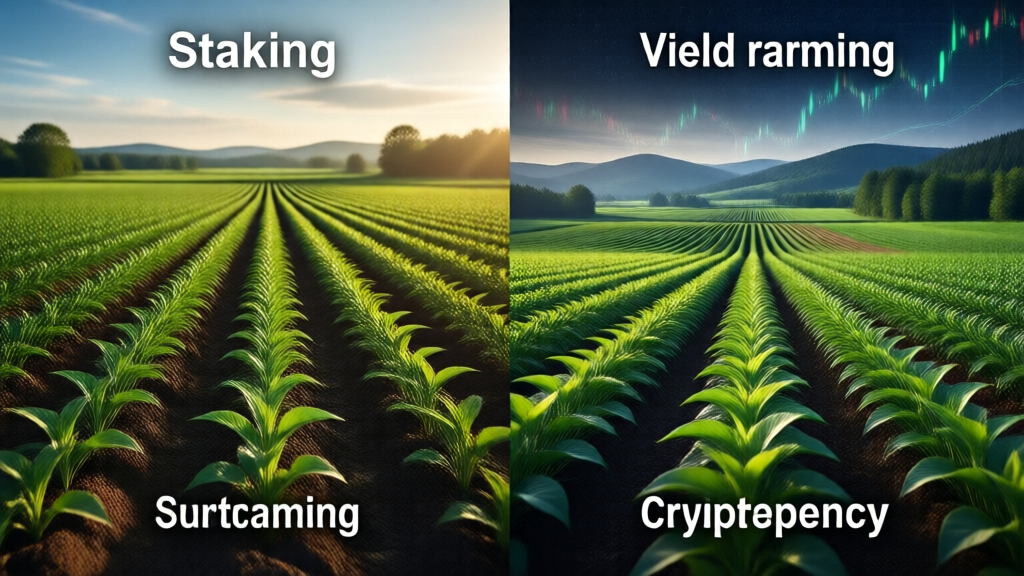
The choice between staking vs yield farming often depends on the investor’s risk tolerance and investment strategy. Let’s break it down.
The Mechanics of Staking
Staking is a process used primarily in Proof of Stake (PoS) blockchains. Here’s how it works:
For instance, staking on a robust blockchain like Ethereum can yield annual percentage rates (APRs) ranging from 5% to 20%.
The Dynamics of Yield Farming
Yield farming is more complex and often involves more risk. Here’s the mechanics:
Some of the highest yield farming protocols can provide returns of over 100% APR, though returns can vary greatly due to market fluctuations.
Comparative Analysis: Pros and Cons of Staking vs Yield Farming
While both staking and yield farming allow investors to maximize their returns, they come with unique advantages and drawbacks.
Pros of Staking
Cons of Staking
Pros of Yield Farming
Cons of Yield Farming
Market Data: User Growth and Trends
According to recent data, the number of active users participating in DeFi projects has surged by over 50% in the past year, with a significant portion engaged in yield farming due to attractive returns. In contrast, staking continues to grow steadily, with Ethereum leading as one of the most staked assets, comprising over 15% of the entire ETH supply.
How to Get Started with Staking and Yield Farming
If you’re interested in diving into staking or yield farming, consider these steps:
The Future of Staking vs Yield Farming
Looking toward the future, staking and yield farming will likely evolve as the DeFi landscape matures. Regulations will further shape these practices, leading to clearer security standards.
Data suggests that by 2025, yield farming may undergo significant transformations, offering greater stability and safety.
Conclusion: Choosing Between Staking and Yield Farming
In summary, both staking and yield farming present viable options for generating passive income in the crypto market. Your choice ultimately should depend on your risk tolerance, investment goals, and the specific cryptocurrencies you hold. As you continue to navigate staking vs yield farming, remember to stay informed and choose a method that best suits your strategy.
Stay ahead in the ever-evolving world of cryptocurrency through platforms like bitcryptodeposit, where you can maximize your returns securely.
Author Information
Jane Doe is a blockchain consultant with over 10 years of experience in the cryptocurrency sector. She has authored over 25 papers on DeFi technologies and led audits for well-known projects in the blockchain space.