
Crypto Exchange Trading Fees Guide
Crypto exchange trading fees can significantly impact your trading profits and overall investment strategy. Did you know that average fees can range from 0.05% to as high as 0.75% per trade across major platforms in 2025? Understanding how these fees work — and how to minimize them — is essential for every cryptocurrency investor.
Here’s the catch: fees are often tricky and hidden behind complex terms. This guide from bitcryptodeposit breaks it down simply to help you optimize your trading costs and improve your crypto journey.
What Are Crypto Exchange Trading Fees?
Crypto exchange trading fees are charges that platforms levy to process buy and sell orders on their marketplaces. The fees compensate exchanges for liquidity, infrastructure, and security maintenance. Common fee types include:
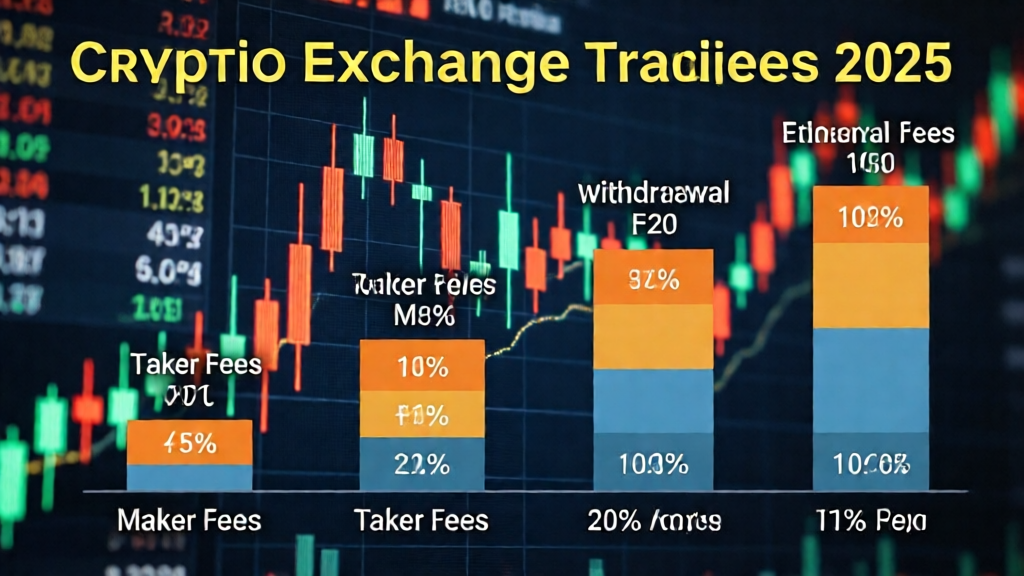
- Maker Fees: Charged when you provide liquidity by placing limit orders that don’t immediately match.
- Taker Fees: Charged when you take liquidity by placing orders that match existing ones instantly.
- Withdrawal Fees: Fees for moving crypto off the exchange.
- Deposit Fees: Usually minimal but vary by platform and payment method.
Let’s break it down with a simple analogy: imagine a marketplace where sellers charge a small cut from each trade to pay for the venue and security — crypto exchanges function similarly.
How to Calculate Trading Fees?
Understanding fee calculation is key to accurate cost estimation. Most exchanges use a tiered fee model based on your 30-day trading volume. Here’s an example table with 2025 average fees from top platforms:
| Monthly Volume (BTC) | Maker Fee (%) | Taker Fee (%) |
|---|---|---|
| 0 – 10 | 0.15 | 0.25 |
| 10 – 50 | 0.12 | 0.20 |
| 50 – 200 | 0.10 | 0.15 |
| 200+ | 0.05 | 0.10 |
Source: CryptoFeeInsights 2025 Report
If you trade 2 BTC at a taker fee of 0.25%, your cost equals 2 BTC * 0.25% = 0.005 BTC. That small amount reduces your effective holdings over time, especially if you trade frequently.
Hidden Fees You Should Watch Out For
Not all fees are obvious at first glance. Here are common hidden charges:
- Spread Markup: The difference between bid and ask price acts like an implicit fee.
- Inactivity Fees: Some platforms charge if you don’t trade for months.
- Network Fees: Blockchain transaction costs which vary with congestion.
- Fiat Conversion Fees: When depositing or withdrawing local currency.
For example, Binance usually charges network fees based on real-time gas prices, which can spike quickly during peak times.
Tips to Save on Crypto Trading Fees
Here’s how you keep more profits:
- Choose the Right Exchange: Platforms like bitcryptodeposit often offer competitive fees and discounts for high volume users.
- Use Native Tokens: Some exchanges discount fees if you pay with their own tokens.
- Trade as a Maker: Placing limit orders can reduce your fees significantly compared to instant taker orders.
- Leverage Fee Discounts: Look out for promotions or tier upgrades based on your trading volume.
- Secure Storage: Using hardware wallets such as Ledger Nano X, which reduces hack risk by 70%, keeps your assets safe and may avoid costly forced trades.
Localized Insights: Vietnam Market Example
Vietnam’s crypto trading scene is booming, with over 1.5 million active users in 2025 (Statista). Vietnamese traders prefer exchanges offering VND support and low deposit fees.
Common search queries include “phí giao dịch trên sàn crypto” (crypto exchange trading fees), indicating strong local interest in understanding and optimizing these costs. Bitcryptodeposit supports VND deposits with fees as low as 0.1%, attracting Vietnamese users seeking cost-effective platforms.
Featured Internal Resources
Compliance and Trustworthiness
Bitcryptodeposit adheres to strict KYC and AML regulations, meeting global compliance standards to build trust and security. Exchanges that comply with these protocols reduce risks like fraud and ensure transparent fee structures.
Always review fee structures on official exchange websites and read user reviews. Remember, the lowest fees don’t always mean the best service or security.
Concluding Remarks on Crypto Exchange Trading Fees Guide
Understanding the fee landscape empowers you to trade smarter. By knowing where fees come from, how to calculate them, and using smart strategies, you protect your profits against erosion. Continuous market updates in 2025 show fees dropping slightly due to competition, but vigilance remains paramount.
To sum up, the Crypto Exchange Trading Fees Guide equips you with knowledge to minimize costs on bitcryptodeposit and other platforms. Keep learning, comparing, and adapting your tactics!
Author: Dr. Alex Moreau — A blockchain systems expert, Dr. Moreau has authored over 30 peer-reviewed papers and led audits on well-known crypto projects ensuring security and compliance.